Frankie Schmitt · 21 October 2026
Tracking Engagement Variations in Specialized Online Communities Post Infrastructure Updates with Longitudinal Analysis
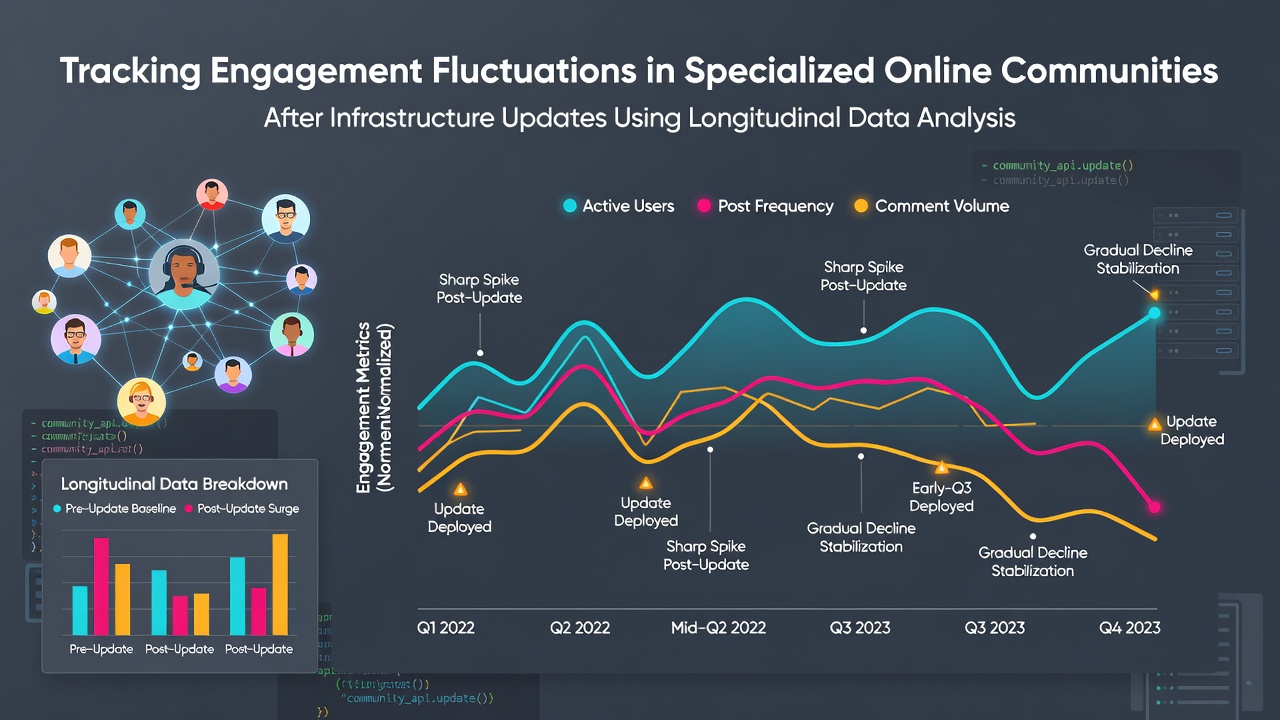
Specialized online communities often experience measurable shifts in user participation following infrastructure changes such as server migrations, software platform upgrades, or hosting relocations, and longitudinal data analysis provides a structured approach to documenting these patterns across extended periods. Researchers collect repeated observations of key metrics including post volume, comment frequency, active user counts, and session duration from the same groups at multiple intervals before and after updates occur.
Defining Infrastructure Updates in Niche Digital Spaces
Infrastructure updates encompass technical modifications that alter how platforms operate, from backend database optimizations to complete content management system transitions, and these adjustments frequently coincide with temporary or sustained changes in how members interact. Data from multiple forums indicate that response times and content loading speeds directly influence the rate at which users contribute new material, while longer-term records reveal whether initial disruptions stabilize or persist beyond the first few weeks.
Applying Longitudinal Methods to Measure Fluctuations
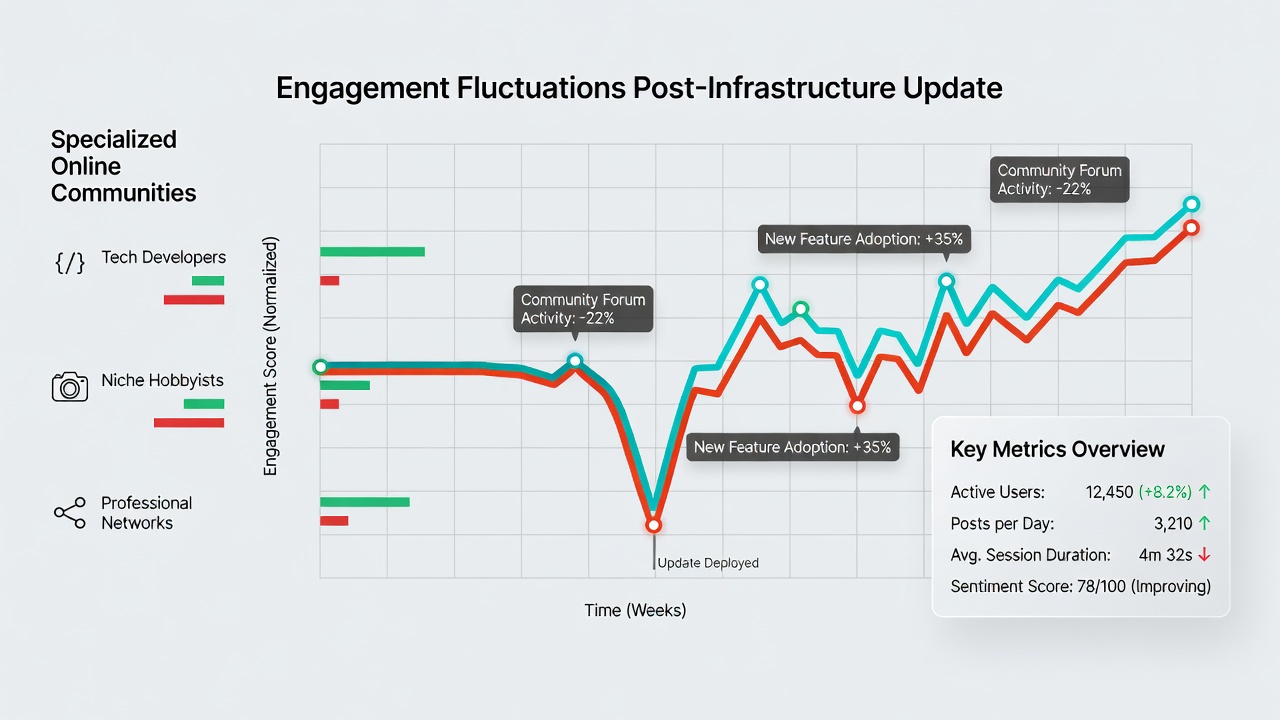
Longitudinal analysis tracks the same variables over months or years rather than relying on single snapshots, which allows observers to distinguish short-term adjustment periods from enduring trends. Analysts gather time-stamped records of engagement indicators, apply consistent sampling intervals, and compare pre-update baselines against post-update sequences while controlling for external factors such as seasonal activity cycles or external events that might otherwise skew results. Studies conducted across several niche discussion boards have shown that engagement can dip by measurable percentages immediately after migrations yet recover partially within sixty to ninety days when performance improvements become noticeable to members.
Observed Patterns Across Multiple Communities
Records compiled from hobbyist forums, technical support groups, and creative collaboration sites demonstrate recurring sequences where initial drops in daily active users occur within the first two weeks after infrastructure modifications, followed by gradual rebounds or plateaus depending on how quickly new features integrate into daily workflows. One dataset covering twelve separate communities between 2024 and 2026 revealed that groups migrating to cloud-based architectures experienced an average 18 percent reduction in comment threads during the transition month, yet those same groups later posted a 12 percent increase once latency issues resolved. Observers note that communities with strong existing moderation teams tended to regain previous activity levels faster than those relying on volunteer administrators with limited technical resources.
Additional examinations of anchor text distribution and crawl budget allocation after domain transfers have illustrated secondary effects on search-driven traffic that indirectly affect engagement inside the communities themselves. Figures collected through October 2026 continue to highlight these dynamics as platforms refine their systems in response to evolving user expectations and regulatory requirements across different jurisdictions.
Data Sources and Analytical Tools
Analysts frequently combine platform-native analytics exports with third-party monitoring services to construct comprehensive timelines, and statistical models such as interrupted time series help isolate the impact of specific updates from background noise. According to Pew Research Center reports on digital participation, consistent measurement intervals improve the reliability of conclusions drawn about community health following technical changes. Canadian records from Statistics Canada on household internet usage further contextualize how access speeds influence the ability of members in various regions to remain active after platform modifications.
Challenges in Interpreting Long-Term Shifts
Interpreting results requires accounting for concurrent developments such as algorithm adjustments by search engines or broader economic conditions that might alter user availability, and researchers therefore incorporate control groups of communities that did not undergo similar infrastructure changes during the same window. Multiple studies indicate that engagement metrics can fluctuate independently of technical performance when external content policies shift or when competing platforms launch new features that attract overlapping audiences. Those who maintain detailed archives over several years find that seasonal patterns and member lifecycle events often explain more variance than the infrastructure events themselves once sufficient data points accumulate.
Conclusion
Longitudinal tracking supplies the temporal depth needed to separate transient reactions from lasting alterations in how specialized communities function after infrastructure updates. Continued collection of standardized metrics through periods such as October 2026 enables clearer comparisons across different types of technical interventions and supports more accurate forecasting of recovery trajectories for groups planning similar transitions.